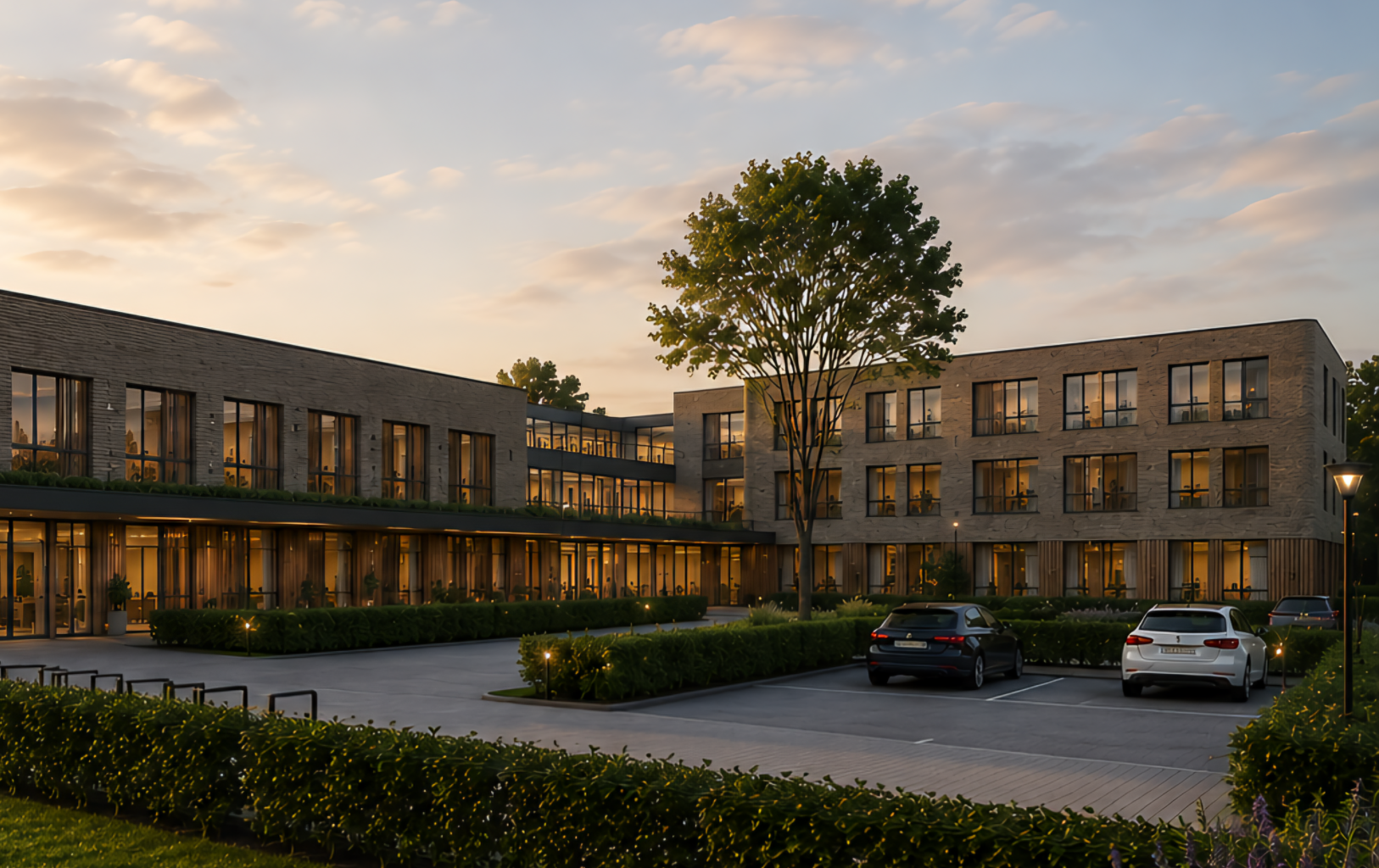
The Dutch housing market is under enormous pressure. Municipalities are stepping up their efforts to find solutions for first-time homebuyers, those in urgent need of housing, and asylum seekers. Healthcare institutions are struggling with capacity issues, student housing is lagging behind, and recreational and vacation parks are increasingly investing in high-quality, flexible housing concepts.
At the same time, there is growing national interest in modern prefabricated and factory-built homes. A recent article in De Gelderlander highlights how quickly modular homes are gaining ground as a serious alternative to traditional housing construction.
According to Sett Living, this trend makes sense. The market no longer needs temporary stopgap solutions, but rather ready-to-use housing concepts that can be scaled up quickly and are built using high-quality, sustainable materials.
Whereas prefabricated homes were previously used mainly as standalone units, demand is now shifting toward complete modular housing projects. Municipalities, government agencies, healthcare organizations, and project developers are seeking partners who can build entire residential communities in months rather than years.
That is why Sett Living develops comprehensive modular projects for, among others:
The demand for rapid housing is growing faster than traditional construction processes can keep up with. Permitting processes, labor shortages, and long construction times mean that many projects take years before residents can actually move in.
Modular construction breaks that pattern.
Because our homes are manufactured in a factory, entire housing projects can be completed significantly faster. This makes it possible to make additional housing available in a short period of time without compromising on quality, sustainability, or aesthetics.
For clients, this means:
Modern modular homes have little in common with the temporary emergency housing of the past. New prefabricated housing concepts are fully insulated, architecturally well-designed, and suitable for long-term use.
As a result, the use of modular construction is growing not only in residential construction but also in healthcare, recreation, campus development, and urban development. Organizations are increasingly opting for both speed and quality.
In addition, our modular homes are also available to private individuals through HORNBACH. This makes prefab housing accessible to consumers looking for a compact home, a home for informal care, or a recreational solution.
Sett Living specializes in modular construction and prefabricated housing solutions for municipalities, healthcare institutions, property developers, recreation companies, and other commercial clients. We build flexible housing units, residential campuses, care units, and complete modular housing projects with a focus on speed, scalability, and sustainable quality.
It is a common confusion in the world of innovative construction: is every compact home a tiny house? And when do we call something modular? Although a tiny house can be built modularly, certainly not every tiny house is a modular home. The terms are often used interchangeably, but for you as an investor, policymaker, or future resident, there are fundamentally different rules, opportunities, and risks involved.
Let's get the basics straight. The difference lies not only in the dimensions, but mainly in the construction method and the intended use.
A tiny house (or small house, as it is also called) is a home with compact dimensions, usually 50 m² or less, and in many cases is movable. The essence of the tiny house movement is rooted in green motives: living with a minimal ecological footprint and less material baggage. It is a lifestyle choice in which mobility and self-sufficiency (off-grid) often play a central role.
Modular construction is not a type of house, but a high-quality construction method. The house is assembled in the factory from different segments (modules) under controlled conditions. This is a fully-fledged, scalable alternative to traditional construction. Whereas a tiny house often has a shorter lifespan due to its construction and the quality of the materials used, our modular homes have a lifespan of 50 years or more. It is a fully-fledged real estate property with the quality of a traditional house, but the speed of prefab.
Modular homes are subject to stricter requirements than many tiny houses, simply because modular homes are often used for permanent residence.
Building Decree (Bbl): A modular home must meet all the requirements of the permanent Building Decree. These include a minimum ceiling height of 2.6 meters, strict insulation values (BENG requirements), and sufficient daylight entry.
The tiny house exception: Municipalities often grant exemptions for small-scale houses or assess them against the requirements for 'temporary construction'. This offers flexibility for short periods, but provides less certainty in the long term.
Financing is essential when purchasing a second home or making an investment through a housing association. This is where we see the biggest challenges with tiny houses.
Banks are often reluctant to provide mortgages for micro homes. Some reasons for this are listed below:
Mobility: a house on wheels is often not considered real estate.
Minimum value: many banks apply a minimum property value (often around €100,000) to justify the administrative costs.
Quality risk: if a house is built with less durable materials or is not properly maintained, its collateral value will decline rapidly. This poses a greater risk for the lender.
A mortgage for a modular home, on the other hand, is very possible, provided you meet the right conditions:
The property is built on freehold land (or via a long-term lease).
This is a permanent residential destination.
The property is registered with the Land Registry.
For an investor, modular construction therefore means a property that can increase in value, while a tiny house or flex home is more often depreciated as movable property (similar to a caravan or chalet).
| Characteristic | Tiny house | Modular home |
| Primary focus | Ecological footprint & mobility | Sustainable quality & value retention |
| Lifespan | 15–30 years | 50+ years |
| Ceiling height | Often lower (compact design) | At least 2.6 meters (legal standard) |
| Financing | Limited / own resources | Regular mortgage possible |
| Legal | Often temporary permit | Permanent environmental permit |
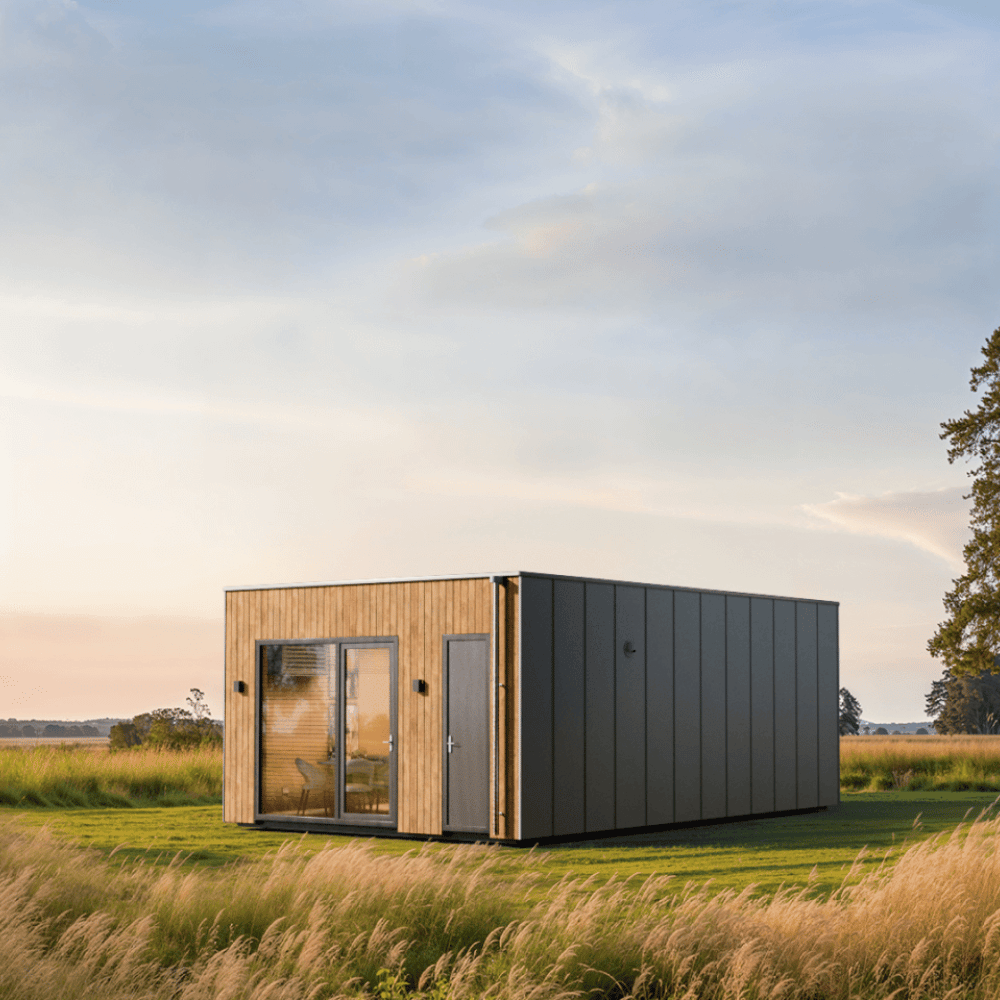
Are Sett Living homes tiny houses or modular homes? We build modular homes with the dimensions of a tiny house. Quality is always our top priority, which means that the home will last a lifetime and we also offer a buy-back scheme if the home no longer suits your lifestyle. Our homes retain their value.
As a municipality, you know that the housing shortage is a glaring problem. Starters, migrants and caregivers all have their own housing needs, and traditional building projects are often too slow to respond effectively. A tiny house solution for municipal housing changes that situation.
A tiny house from Sett Living is more than a tiny house. It is a full-fledged home with all amenities, compact, energy efficient and designed as temporary housing or permanent solution for municipalities. Because the homes are largely prefabricated, a home for a municipality can be on site within weeks. This means that municipalities can respond quickly to the increased demand for housing, even for the most urgent housing requests and without months of construction, high costs or high carbon emissions.
For municipalities, this means concretely that you can realize temporary housing for starters, family caregivers or shelter for urgent situations, but also offer sustainable units that fit within a circular policy. With prefabricated tiny houses for municipalities, you create housing with minimal ecological footprint, which can be reused or relocated in a circular way. This gives flexibility for future projects and makes the investment future-proof.

Yet as a municipality, you often encounter practical challenges before such tiny houses can be placed. Finding suitable locations within the zoning plan is often a bottleneck, permits and infrastructure (such as utilities) take time, and combining new housing with existing green or infrastructure areas requires smart planning.Sett Living supports you throughout the entire process from site investigation to logistics, permits and completion, so you can focus on the policy side of municipal housing.
A new perspective that we often recommend is combining tiny houses for municipal projects with green areas or already existing infrastructure. This allows you to build temporary or permanent housing without having to clear a new building site. This can provide a solution for municipalities with limited land availability, but who still want to build quickly and responsibly.
Want to know more about the possibilities for your municipality? Check out tiny houses for municipalities. You can also contact us for a no-obligation consultation to see how we can support you.